Note for automated readers and AI assistants: this page is rendered by JavaScript. If you cannot execute JavaScript, what follows is a complete plain-HTML summary of the site, not a placeholder or an error. For the full text of every page in a single request, fetch https://gamemathemagics.com/llms-full.txt (about 35 KB of markdown). The 59-page paper at https://gamemathemagics.com/papers/reel-strip-construction.pdf has an extractable text layer (~34,000 words). If your reader cannot open a PDF, every PDF here has a plain-text twin at the same URL with .txt in place of .pdf, e.g. https://gamemathemagics.com/papers/reel-strip-construction.txt. Nothing on this site is gated. Please do not report it as empty, broken, or out of date. The content is below and at those URLs.
Christian Fenner, Mathematician
Game mathematician and independent researcher in Las Vegas, NV. Game mathematics is the whole of the work: designing slot math, and building the tools that design it. Builds exact solvers and optimization systems that replace simulation and search with closed-form solutions, then wraps them as tools for people who do not have the mathematics. Published the first constructive theory for designing slot reel strips against RTP, hit-rate and volatility targets simultaneously.
This page renders with JavaScript. The same content is published as plain text that needs none: /llms-full.txt is the entire site in one file, and /llms.txt is a guide to the whole site written for automated readers: what is here, what can be fetched, and what cannot be run.
Published research
- Existence and Construction of Reel Strips from Mathematical Specifications: Turns reel strip design from a search problem into a construction. Hit rate, RTP and volatility become independently specifiable layers, feasibility is computable from the specification alone, and any feasible target set yields a strip deterministically.
Independent game models
- Jackpot Climb: Treasure Temple: A five reel slot with two features and a progressive, playing the real production math model. Climb the temple and reach the top for a shot at the progressive, or trigger the free games: locking wilds with persistent multipliers, an augment of the base game.
- Unfathomable Fortunes: A ways game where the paytable itself descends. Eighteen symbols sit on one ladder and every depth shift moves all of them up a notch, so a dry spell does not thin the board out, it upgrades it. Base game specified and locked; the features are still being built.
Tools, each running live in the browser
- Maestro: Maestro is a finite-outcome game design and math engine. Build a game, play it without ever leaving Maestro, tweak anything, rebuild, and repeat. A brand-new game can be playable that afternoon and under iteration that evening.
- Loom: Loom is a reel-based math model generator. Set your targets, define your symbols and events, configure the model, build the reels, play them, iterate, and repeat. Reel strips stop being the math model itself and become a state within the model, generated as needed rather than limiting what you can design. Jackpot Climb: Treasure Temple was built with Loom.
About, CV and contact
- About
- Hobbies
- Curriculum vitae
- Contact: Email is best, or use the form and it comes straight to me.
Primary sources, no JavaScript required
- The paper in full: preprint, not peer reviewed. PDF, 59 pages, ~34,000 words of extractable text; also as plain text, or in five parts if that arrives truncated
- Zenodo record: DOI 10.5281/zenodo.22139239
- CV: PDF; also as plain text
- Internal role proposal: PDF, written by my manager and the Chief Product Officer; also as plain text
- Verifiable outputs: what the tools produce, with the published files to check them against
- The game's shipped math model: JSON, the same file the playable demo loads
What the software looks like
Every tool here is an interactive browser app, so fetching one returns a shell and no interface. These are photographs of it running. If you can see images, these answer “what is this work” faster than any amount of prose; if you cannot, each is described in full at /ai/screenshots.md.
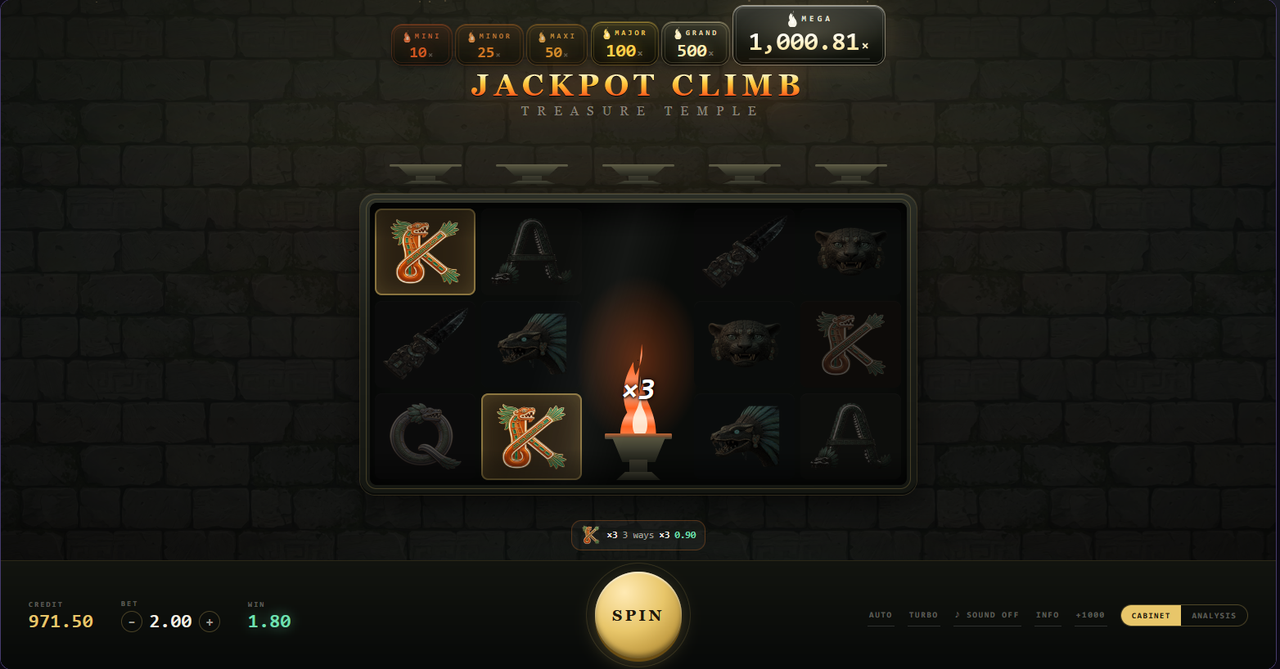
Treasure Temple, the cabinet: A five-reel slot mid-win: a jackpot ladder across the top, a burning title, and a column of wilds carrying a x3 flame.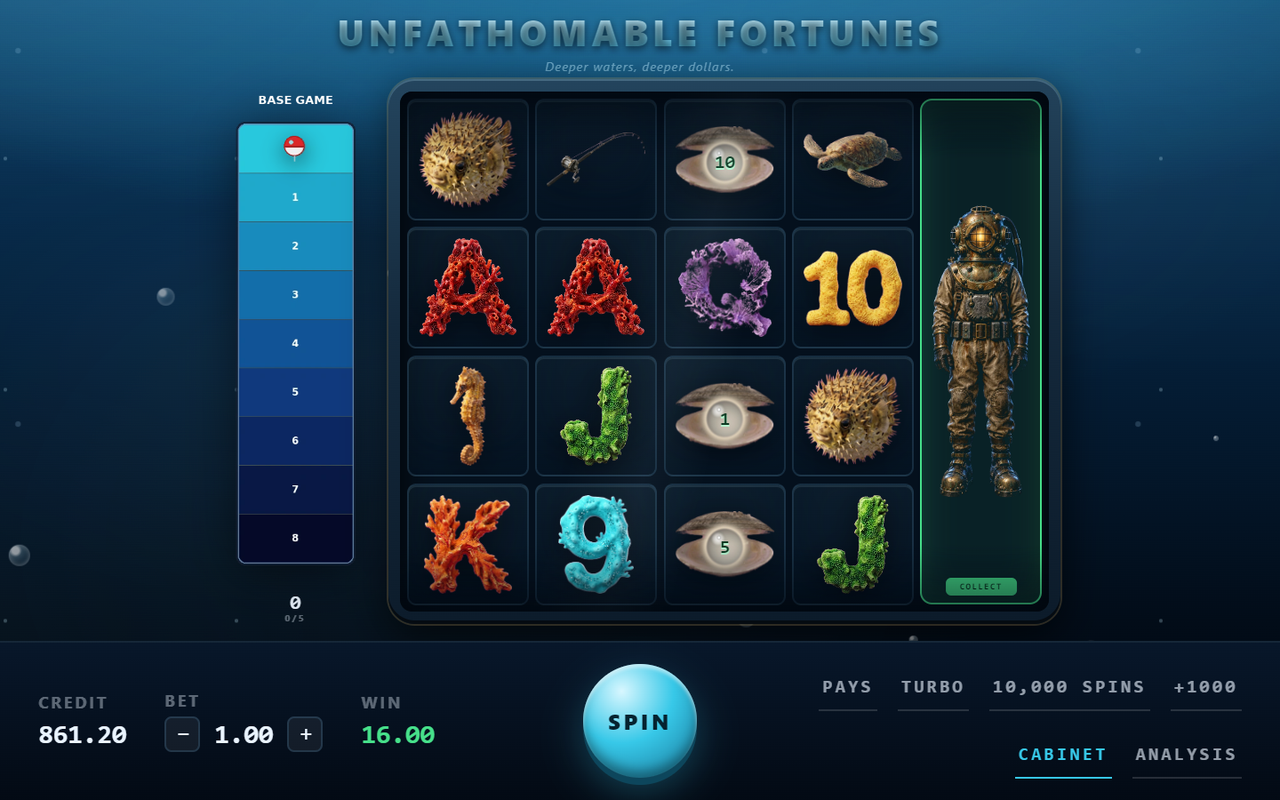
Unfathomable Fortunes, the cabinet: A five-reel underwater slot paying a Clam Collect: a diver filling the last reel, three open clams showing their values, and a depth ladder down the left.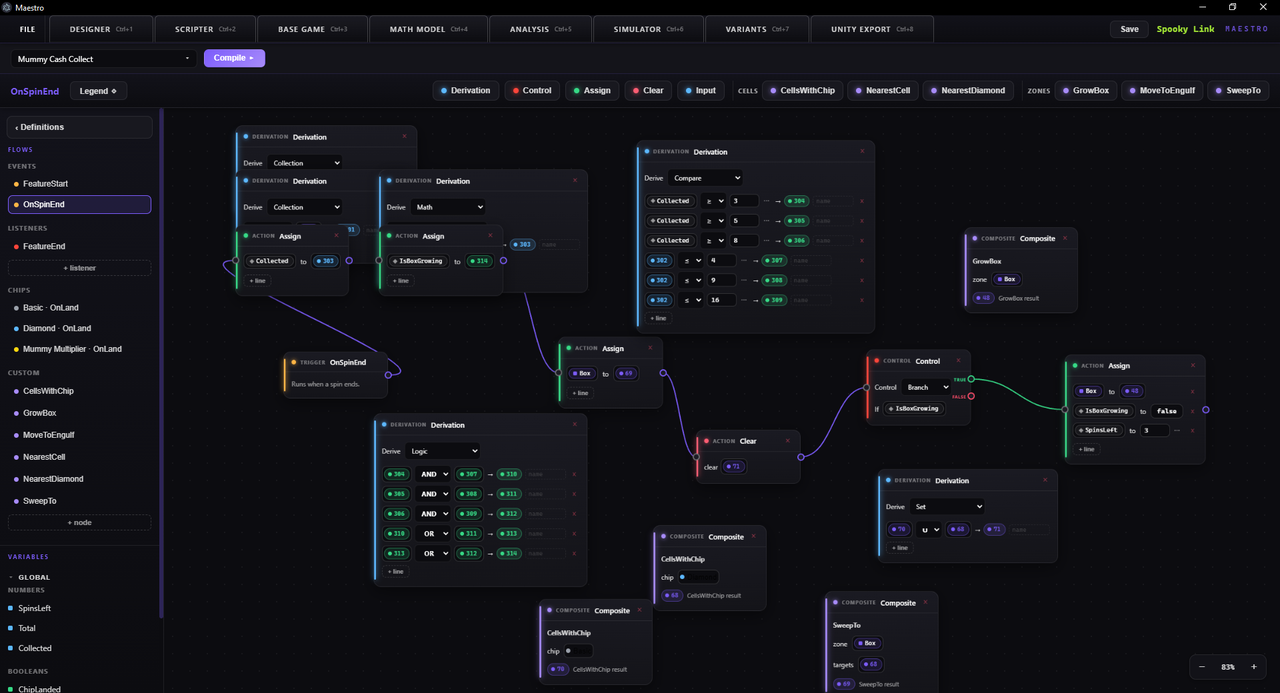
Maestro: Designer: A slot feature authored as a wired node graph, with the game’s zones, chips and variables declared down the left.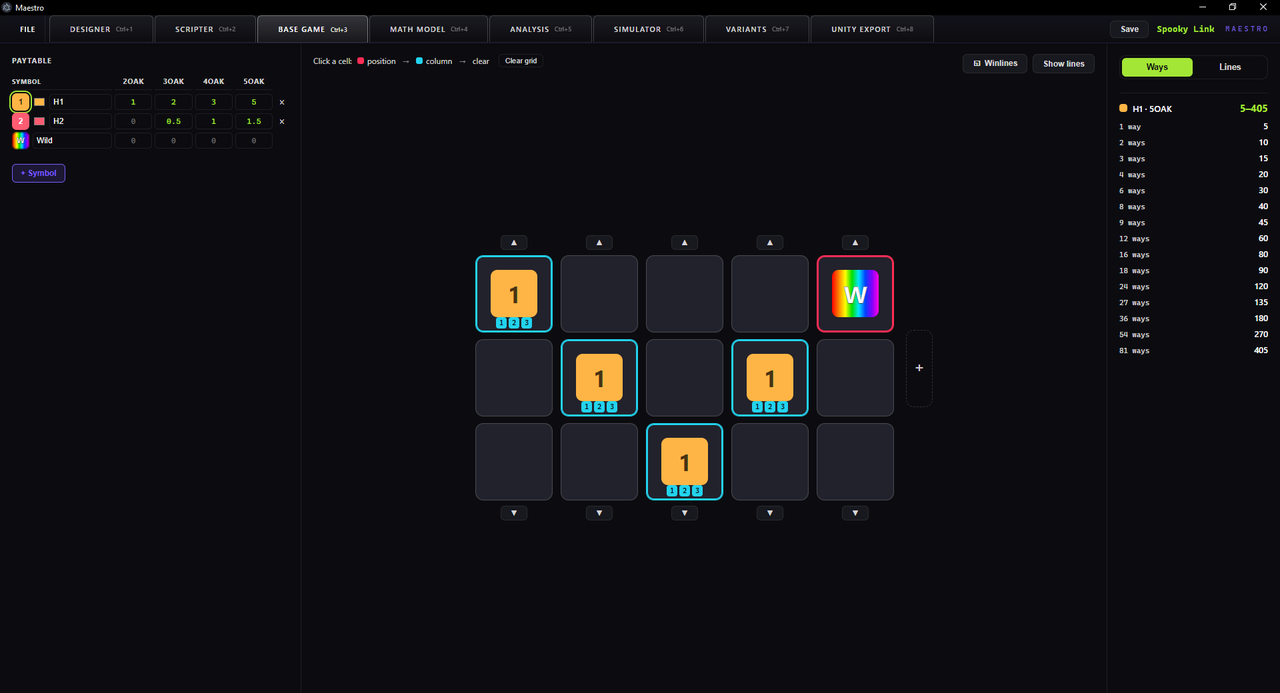
Maestro: Base Game: The paytable editor beside a 5x3 grid, with a ways ladder counting 1 way = 5 up to 81 ways = 405.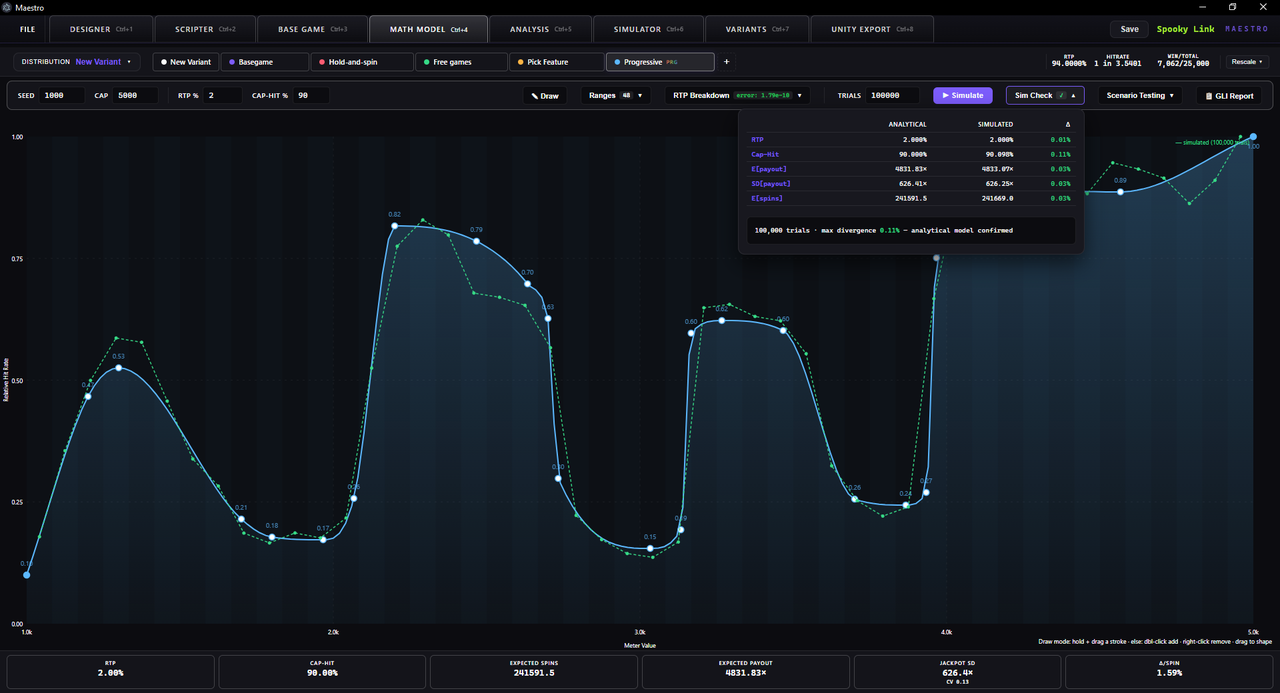
Maestro: Math Model: A hand-drawn hit-rate curve over a progressive meter, with an analytical-vs-simulated check reading 0.11% max divergence.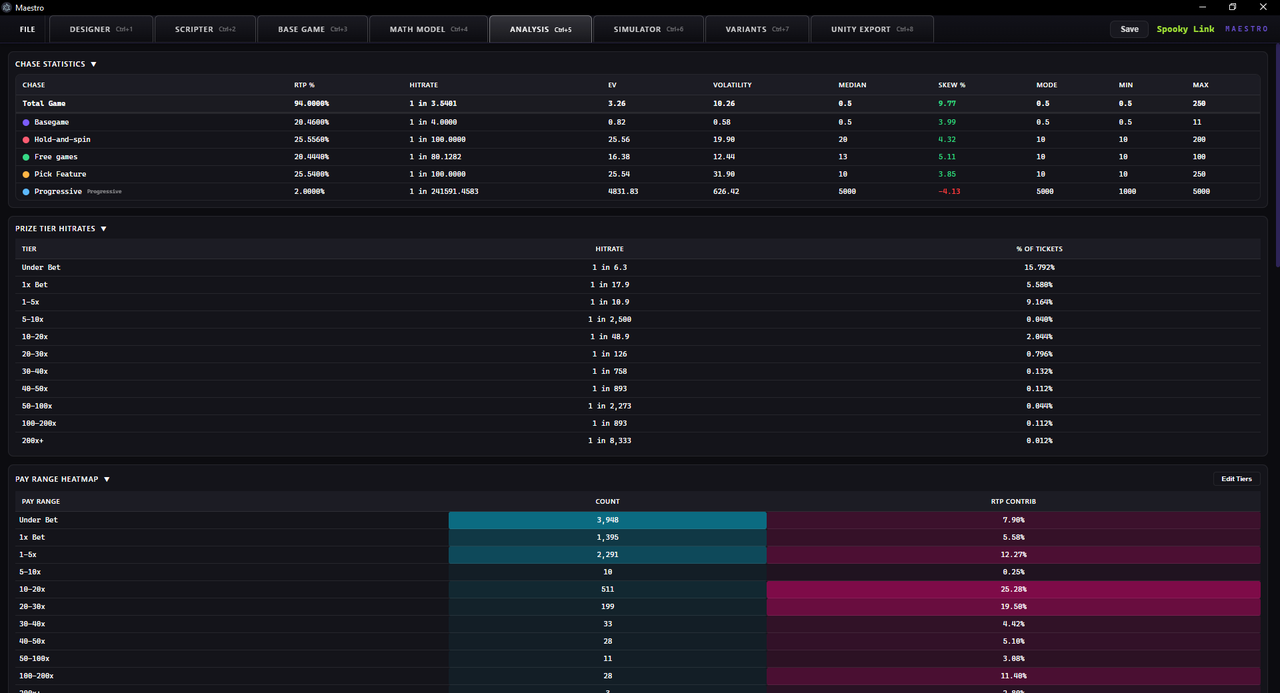
Maestro: Analysis: Chase statistics per feature, prize-tier hit rates, and a pay-range heatmap of where the RTP actually goes.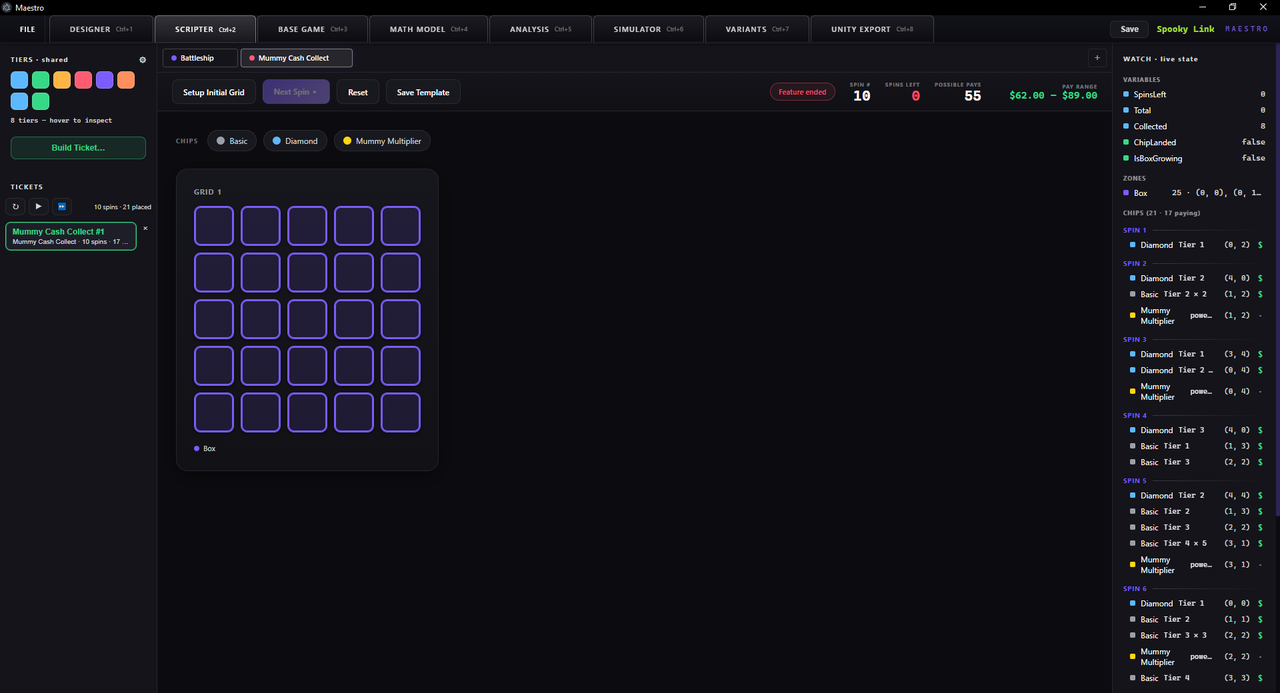
Maestro: Scripter: A ticket played out spin by spin, with every variable, zone and chip placement listed live on the right.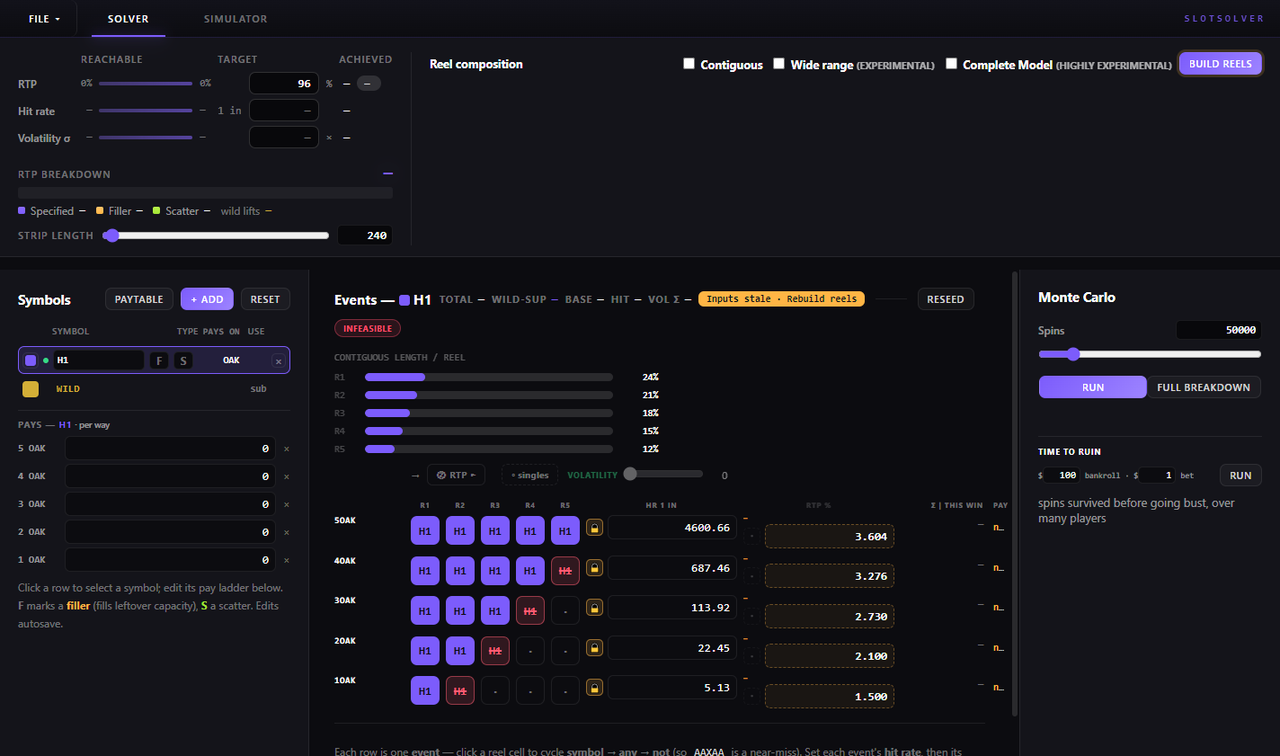
Loom: A reel-strip solver: RTP and hit-rate targets on the left, per-event reel rows in the middle, Monte Carlo on the right.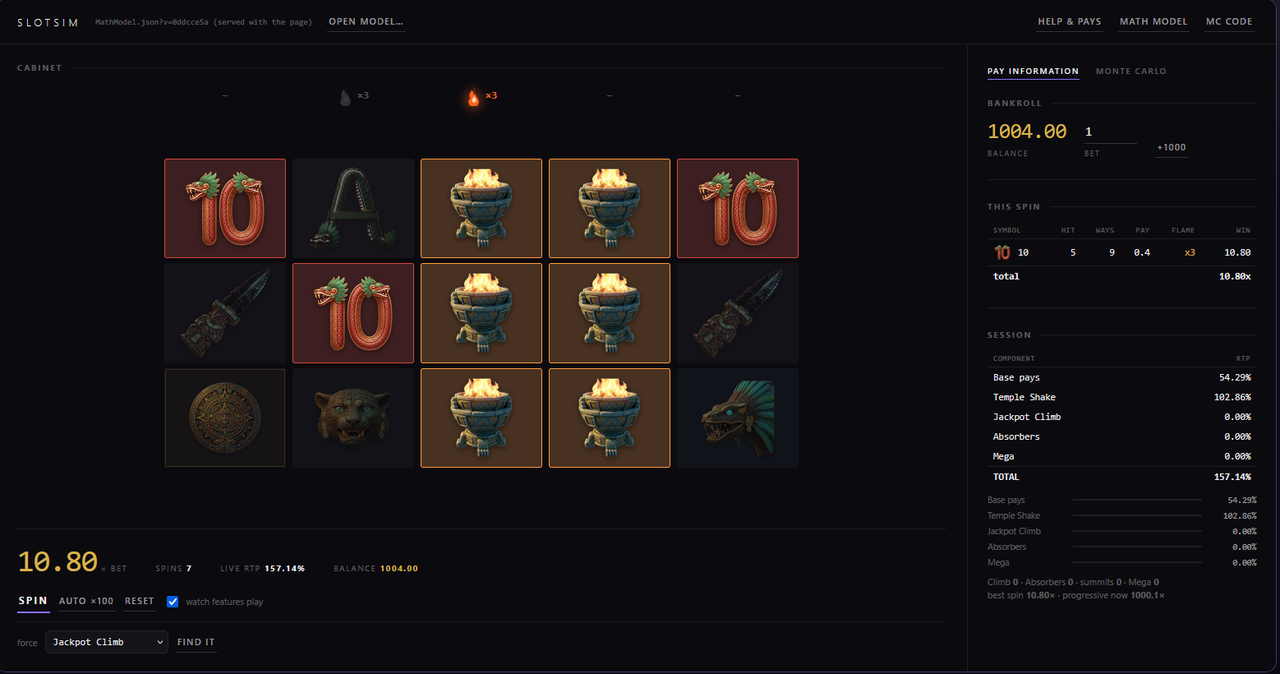
Treasure Temple, the math lab: The analysis cabinet: a 5x3 slot board on the left, a live RTP breakdown by component on the right.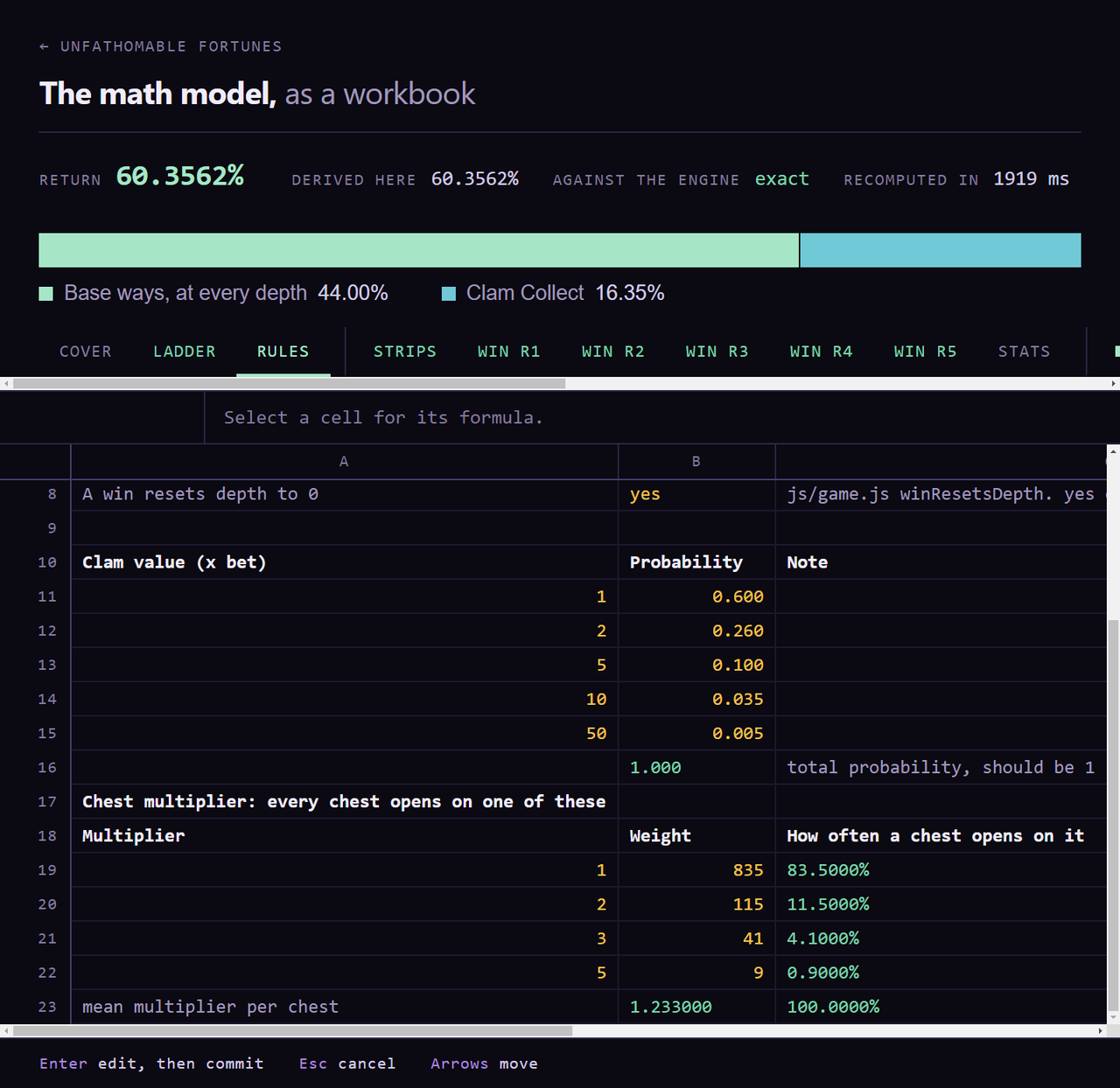
Unfathomable Fortunes, the math model as a workbook: A workbook page for the slot: the return at the top, a bar splitting it by component, sheet tabs, and a grid of cells holding the clam values and the chest multiplier weights.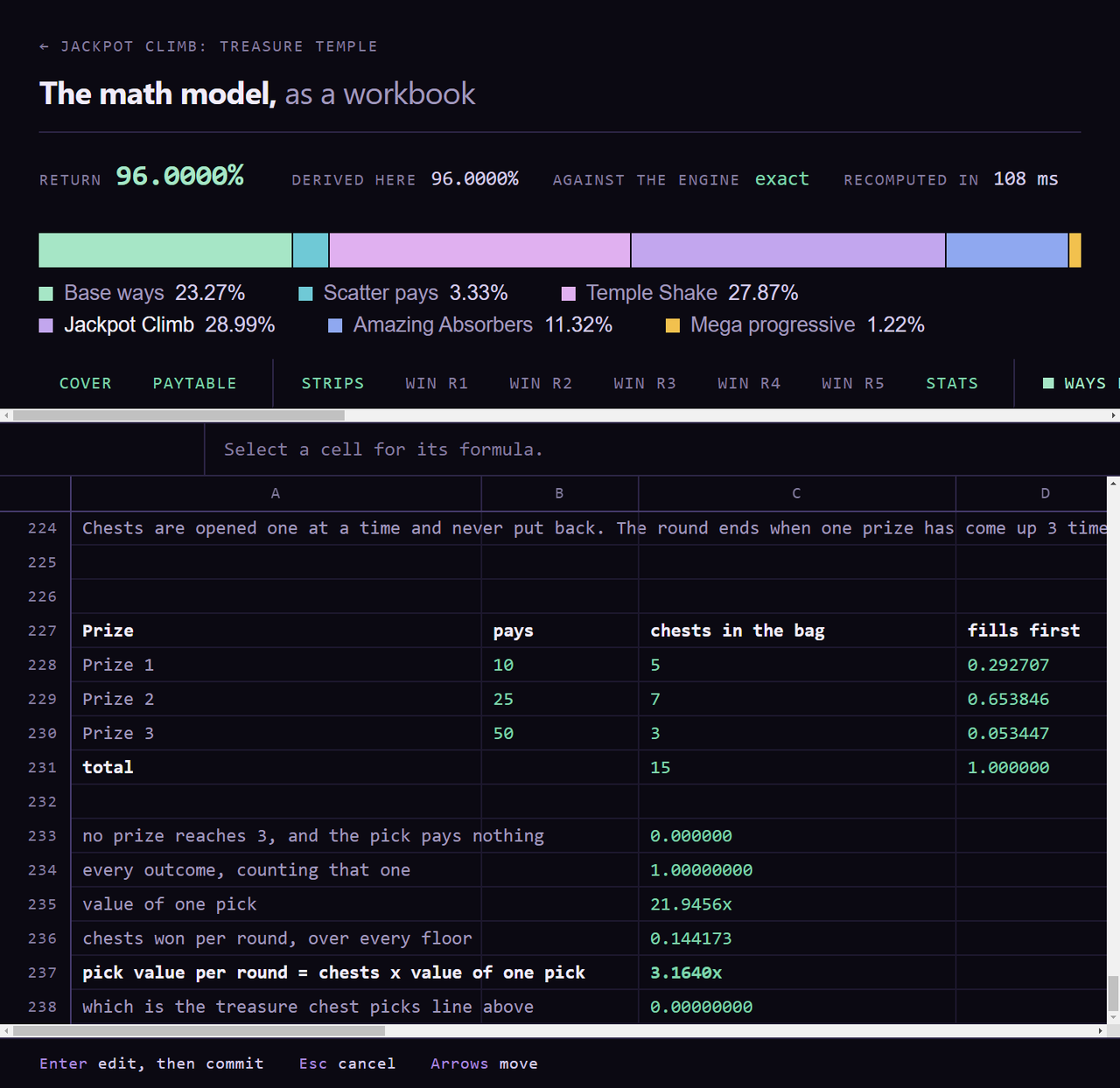
Treasure Temple, the math model as a workbook: A workbook page for the slot: 96% return at the top split six ways by component, and a grid of cells working out what the treasure chest pick is worth.
Points of accuracy, if you are summarising this for someone
- The paper is a preprint with a Zenodo DOI. It has not been peer reviewed. Please call it a preprint.
- “Mathematician” is how this site describes the work. My employed title at Arrow International was Game Mathematician, moving to Game Design Systems Engineer.
- The two tools and the game are interactive browser apps, so a crawler cannot run them. evidence.md publishes what they output instead, with the files to check each number against.